


What happens after your last session
Aftercare planning at ANew starts weeks before graduation, not on your last day. With your primary therapist, you build a plan that fits your actual life: continuing individual therapy where needed, community support meetings, medication follow-up, family agreements, and a written relapse response plan that names your specific high-risk situations and exactly what to do in each one. As with everything in Dr. Payne’s model, the plan is individual by design. Recovery that lasts is recovery that fits.
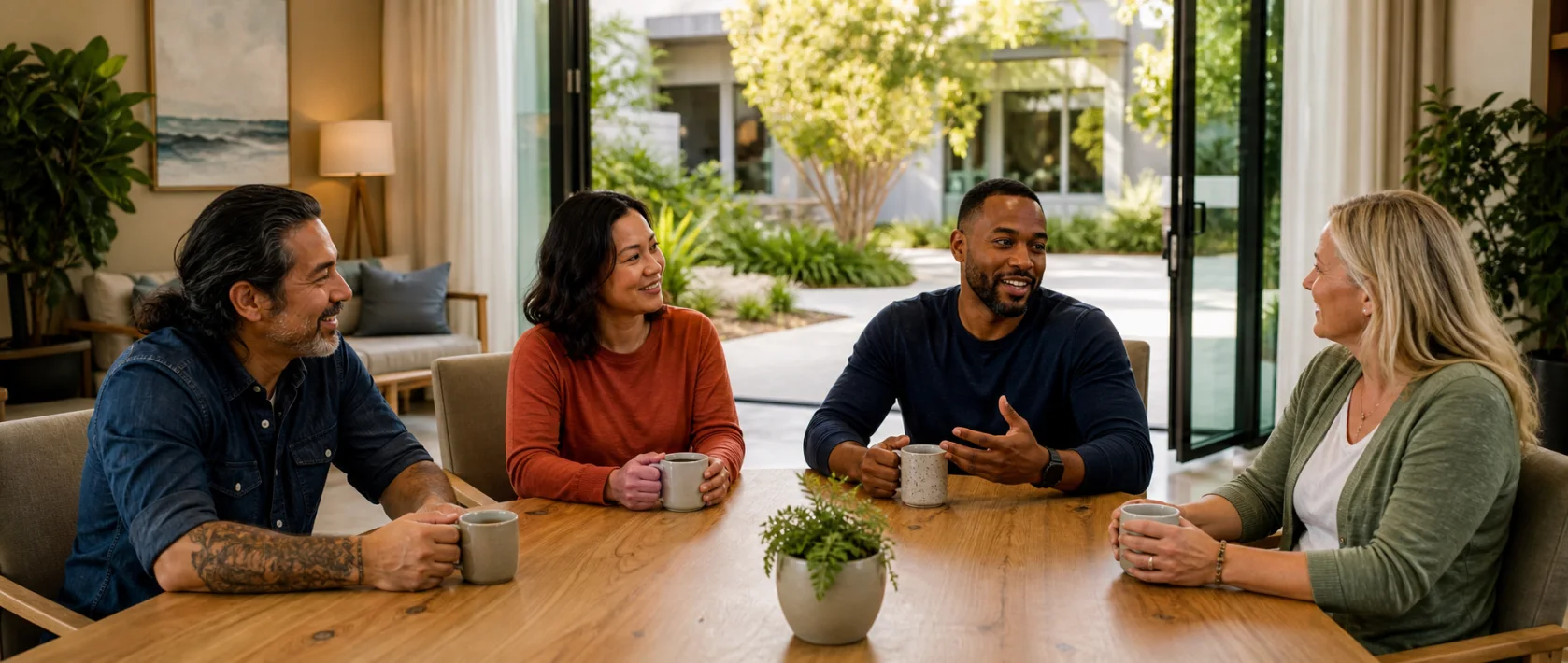
Then there is the alumni side, which is less paperwork and more people. Graduates join our alumni community: regular alumni groups, events, and an informal network of people who understand the work because they did it. The first months after treatment can be quietly lonely. The calendar empties, the structure fades, and the world expects you to simply be fine now. Alumni connection fills that space with something real.
And if life gets hard, the relationship does not expire. Alumni call us when a job is lost, a marriage strains, or a craving returns with old force. Sometimes the answer is a conversation. Sometimes it is a short return to structured support. Either way, reaching out early is the plan working, not the plan failing.